Picture this.
You are walking through an antique shop. You see the usual culprits of huge dusty cabinets, glass dishes, and weird dolls.
You turn the corner and see several frames stacked up against the wall, several pieces hanging on the wall, and a couple of print racks filled with art.
You flip through them all and find one that stands out to you. It looks like a drawing of Greek statues. Suddenly you wonder:
Is this original artwork?
What checklist do you use to gather information about the piece before you buy it? Here are ten things I look for before I bring a piece home.
If you’re just starting your art collection, you may also enjoy my Beginner’s Guide to Buying Original Art on a Budget where I share my favorite places to find affordable original artwork.
Buying Original Art on a Budget
I Look for Texture First
One of the best clues is texture. Get up close and personal so you can see the details on the canvas.
If it’s an original painting, you should be able to see brushstrokes, raised paint, palette knife marks. Watercolors will have some bleed in-between the colors. Sometimes it can be difficult to tell if it’s original artwork or if it’s a giclee print. Giclées are prints that have clear brushstrokes over them to give them the appearance of texture. So, when you are looking at the texture of a piece, make sure the brushstrokes follow the colors of the painting underneath, and not just a generic texture that extends over the entire piece.
Remember that not all original artwork has thick brushstrokes. If you are looking at a drawing, charcoal, or mixed media, you want to look for pencil or pen lines and indentations into the canvas. You should be able to see the slight transfer of the material onto the paper that comes with different applications of pressure.
Paper prints will be a flat surface without any texture. They are typically shiny and sometimes, depending on the quality, you can see the actual pixels of the ink. If it’s a print on canvas rather than paper, you should be able to see the woven texture of the canvas and the colors of the print laying over it.
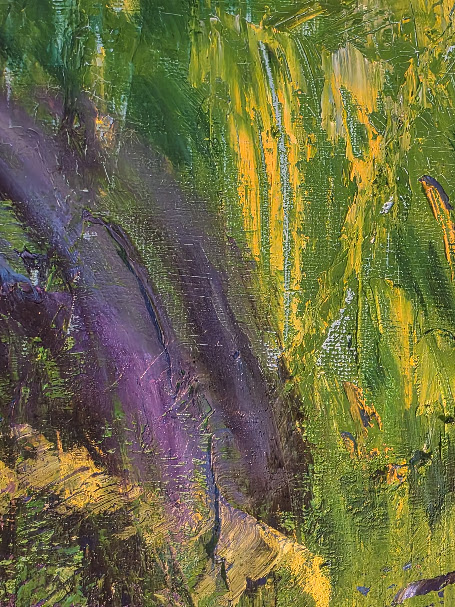
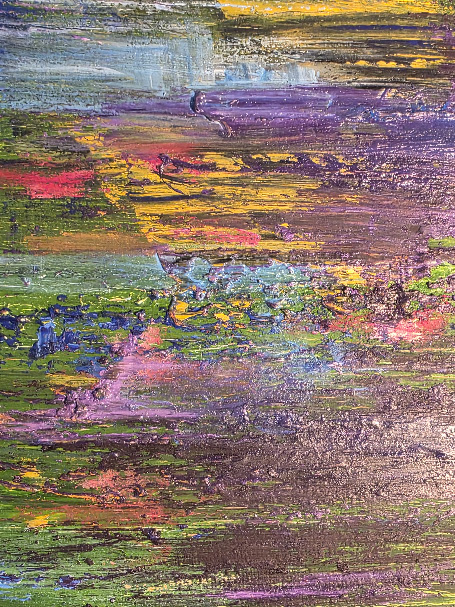
Raised brushstrokes and palette knife marks are often clues that you’re looking at an original painting.
I Check for a Signature
Not every original will be signed, but it is typically in the lower right corner of the piece. Sometimes artists will work the signature into the piece in other areas. You just have to look carefully if you don’t automatically see it in the corner.
A lot of the time, there will also be a year next to the signature. This can give you a lot of information on what stage of life the artist was in when they did the piece and give you clues about the artist’s career.
Occasionally, you will find a signature or initials on the back of the piece.
Original artwork will usually have the signature in the same medium they used to create it.
Sometimes an artist just doesn’t sign their work, or it’s covered up by the frame. That’s why the signature is just one small piece of the whole story of the piece.
A signature and date doesn’t necessarily mean that it’s original artwork, but it does give you information on the piece.
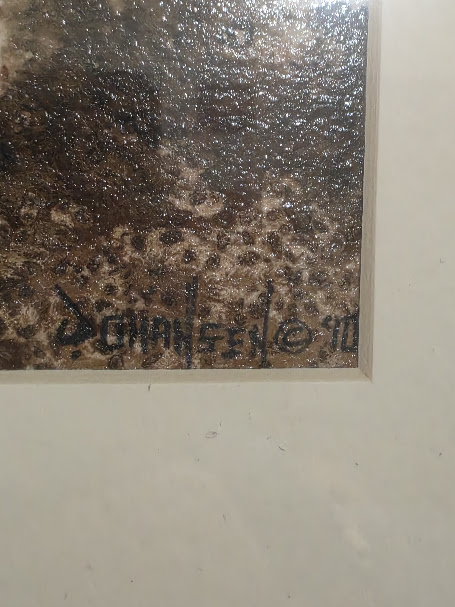
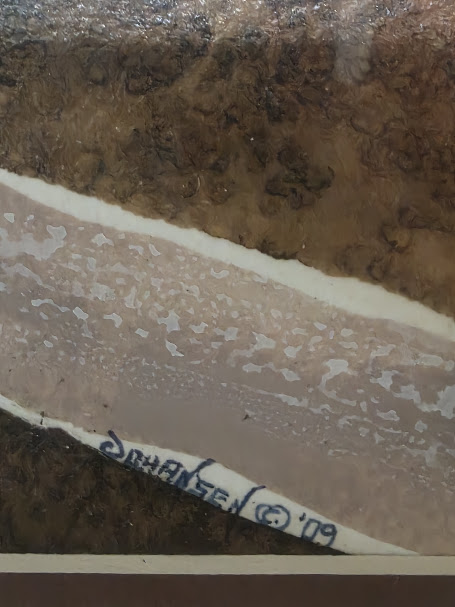
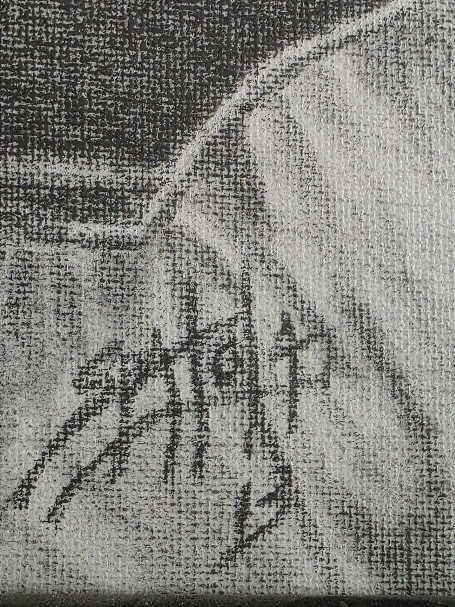
Artists sign their work in many different ways, so don’t expect every signature to look alike.
I Flip It Over
The back of the piece and frame can give you just as much information about it, if not more, than the front.
If the piece was purchased from a gallery at one point, there will usually be a gallery sticker on the back. This is where all of the “official” information usually lives.
It can also have artist information, receipts, certificates, or notes. This can be a wealth of information to help tell you the story of the piece. When I purchase art from an auction house, it usually comes with all this information and when I have it framed, I ask the framer to add an information pocket to the back to safely store the associated information. That way I am not looking in file cabinets or other “safe spots where I will definitely remember” later.
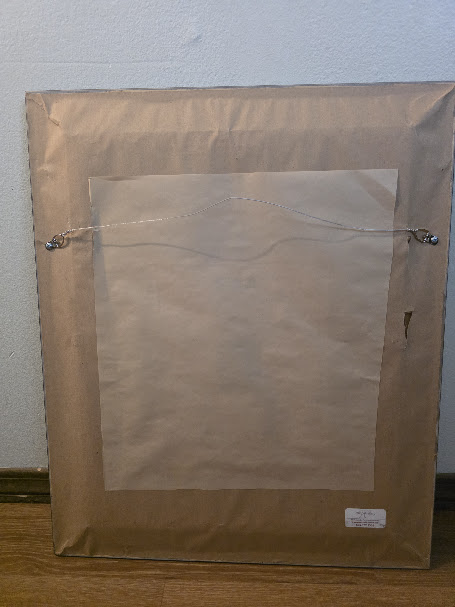
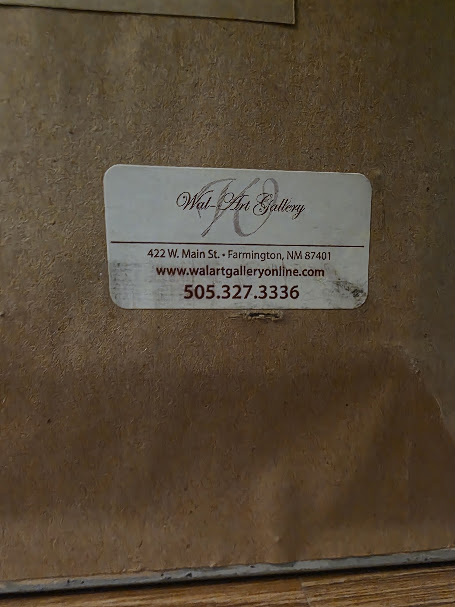
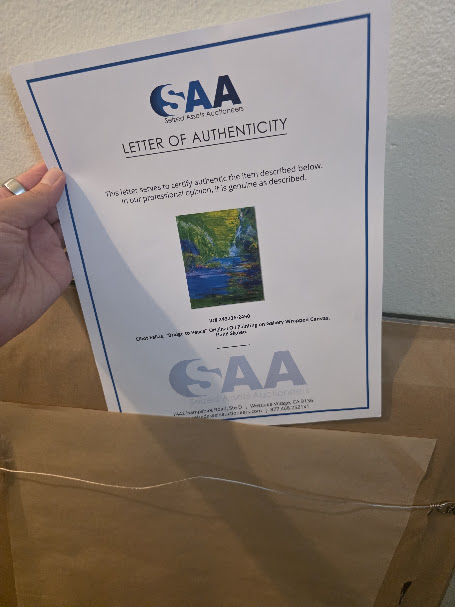
Always flip artwork over. Gallery labels, certificates, and notes can tell you a lot about a piece.
I Look for Edition Numbers
Edition numbers will typically be at the bottom somewhere in the border or mat of the piece. It will look like 30/400 or some combination of numbers. It means, in this example, that this piece is number 30 out of 400 printed.
Seeing these numbers gives you valuable information that the piece is a print, not an original. But looking at the total number of prints available, in this case 400 means that only 400 were printed. So, the smaller the edition size, the fewer prints that exist.
Prints are not a bad thing. In fact, I think prints are one of the best ways to start collecting affordable art. But if you are at a point in your collection that you want original art, it’s important to be able to distinguish between the two.
I Study the Surface Closely
We touched on this section a little going over the texture of the artwork, but we also want to look at the actual surface the art was done on.
If it’s an unframed painting, you should be able to see the canvas edges. Can you see paint strokes that continue on the edges? Does the paint bleed over slightly? Can you see pencil or pen marks underneath the paint? Any corrections?
If it’s watercolor or other media, can you see the texture of the paper underneath the color?
All of these things can give you clues to whether or not this is an original. Little imperfections are a good thing that indicate that it was made by hand and are a good sign.
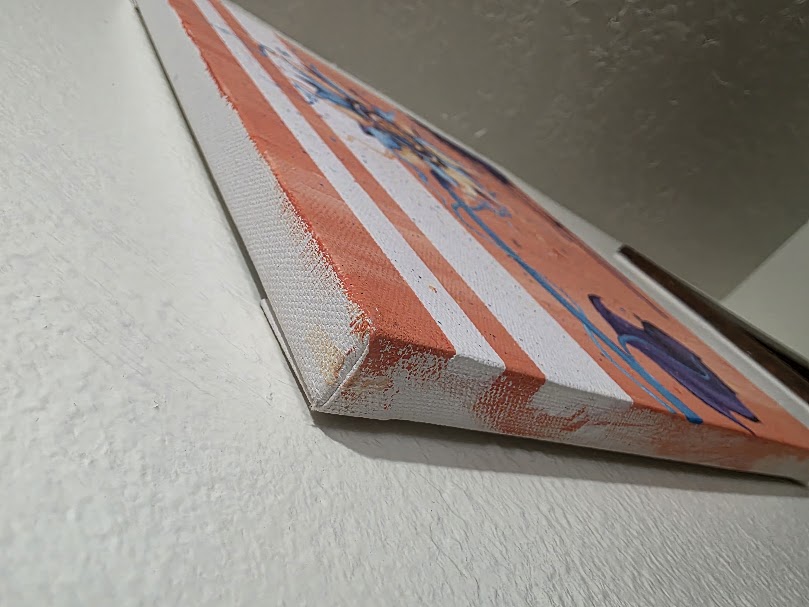
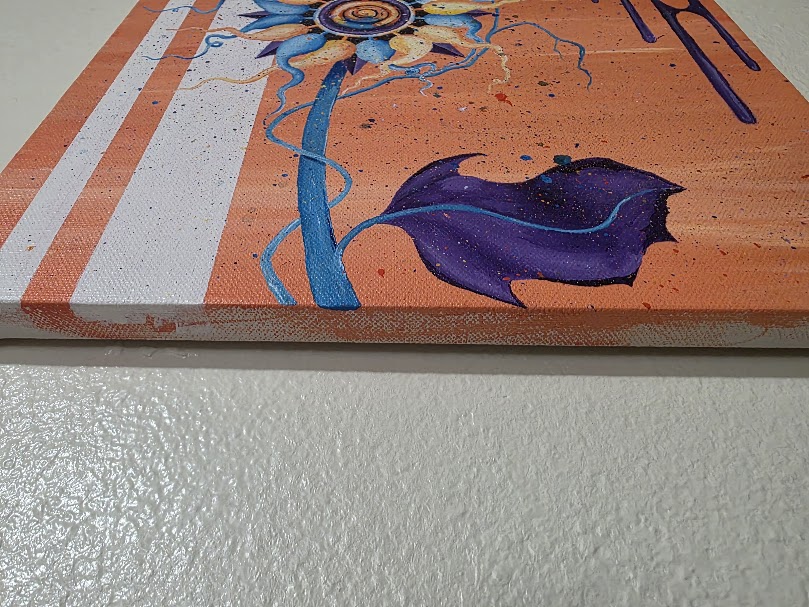
Paint wrapping around the edge of a canvas is one clue that a piece may be original.
I Research the Artist
Now that you have a little more information, you can research the artist. If you can make out the artist’s name on your own, try and do a quick Google search or an reverse image search. It’s even easier if you found information on the back of the piece.
You never know what your search will find. Maybe the artist website or Instagram, an auction house, eBay listings, or a gallery.
Not every artist needs to be famous for you to purchase the piece, but it will give you a more rounded story of the artwork, the artist, and its value.
What really matters is that you like it. We are just collecting information to help us know the story and make a decision. Most of my pieces are from unknown artists, and I am okay with that. I love it, and I look at it every day.
Some of my favorite pieces have actually come from local art festivals where I was able to meet the artist in person and hear the story behind the work.
Why the Spring Tempe Festival of the Arts Is Worth It for Affordable Art Lovers
I Don’t Assume Expensive Means Original
Yes, originals are typically more expensive than prints, but that doesn’t mean they are out of reach. I have been to big box stores that have decorative art for sale that is just as expensive as an original from a local festival or something from an estate sale.
That’s what this blog is about, is finding affordable art in less predictable ways.
I’ve found some of my favorite affordable pieces at local festivals, thrift stores, and estate sales.
What I Found at 6 Thrift Stores (And Why I Didn’t Buy Anything)
Estate Sales: My Favorite Place to Hunt for Affordable Art
I Ask Questions When I Can
Asking questions is great if you’re at an art festival, gallery, or a studio/coffee shop situation. It’s a surefire way to know for sure if it’s an original or not.
I like to just say “hi” and then ask if they are the artist and give their art a compliment. This usually leads into a conversation about what medium it’s made from, when they did it, and even what inspired them. If you decide to purchase a piece from them, it adds to the story and makes it even more interesting.
Artists usually enjoy talking about their work, so give it a go and see what you can find out!
One of my favorite parts of visiting art festivals is getting to meet the artists and learn the story behind each piece.
I Went to the Rio Grande Arts & Crafts Festival… Here’s My Honest Take
I Don’t Worry About Perfection
Look, I am typically a very Type A person (I’m working on it), but there are certain things that I think are just better when they are not perfect. Artwork is one of those things that I think are inherently imperfect. If it’s too perfect, I become suspicious.
That’s one of the reasons art has such a strong pull for me. It’s because someone made that. They put their love and passion into it. It comes with flaws, but all I see is beauty.
Tiny mistakes, uneven edges, and imperfect lines are all just part of the character of the piece.
However, imperfections and damage are two different things. If an older painting is not well taken care of, it can start to have cracks. If it was in a smoker’s home, it could be discolored and have a layer of tar. Sometimes there is water damage on the piece.
If you find art with actual damage, you have to think about how or if you will repair it and the cost associated with it. Personally, I would not purchase a damaged piece because I know myself well enough to know that I will never get it repaired. Unless it’s a piece I can’t live without, I would walk away.
I Ask Myself One Final Question
Would I love to see this piece every day for years to come?
That is the real question to ask when looking for original art. Yes, I think there can be investment value to some pieces, but really, you are looking for what you love and what inspires you.
Final Thoughts
What I have learned after years of visiting art festivals, thrift stores, estate sales, and small galleries, is that you really just need to slow down and look at the little details on pieces you are interested in. Don’t be afraid to pick it up and study it. There are not necessarily rules to memorize, but this list should give you a good idea of how to collect information to help you make a more informed decision. The more curious you become about a piece of art, the more confident you can be before you purchase it.
The more pieces you look at, the more you will start to discover your personal taste in art and you will start to recognize the little clues that make each piece a unique work of art.